
Longines vs. Tissot: Which Swiss Watch Brand Is Better?
When people compare Swiss watches, Longines and Tissot are two names that come up again and again. Both brands have deep Swiss roots, strong reputations, and collections that appeal to buyers who want heritage, craftsmanship, and dependable everyday wear without stepping into the highest luxury price tiers. That is exactly why so many shoppers end up looking up Longines versus Tissot guides, or even scrolling through Reddit discussions before making a decision.
A Longines vs. Tissot comparison can help buyers understand the key differences between the two brands.
Reddit threads and watch forums can be useful for getting unfiltered opinions, but they often reflect personal preferences more than practical buying advice. In reality, the better brand depends on what you want from a watch: timeless refinement, sporty versatility, modern technology, or simply the best value for your budget.
Brand Histories at a Glance
Longines traces its history back to 1832 in Saint-Imier and has built a reputation around elegance, precision, and a long connection to aviation and pioneering exploration. Today, that identity still comes through clearly in collections such as the Spirit line, which draws directly from the brand’s pilot-watch heritage.
Tissot, founded in 1853 in Le Locle, is equally rooted in Swiss watchmaking tradition, but its brand personality leans more toward accessibility, innovation, and sport. Over the years, Tissot has developed a reputation for combining classic Swiss craftsmanship with broader appeal, from dress watches to sporty chronographs and tactile technology through the T-Touch line. Its long-standing links to motorsport and cycling also reinforce that more dynamic image.
Berani carries both brands, offering the opportunity to explore the two side by side and compare styles more confidently rather than relying only on speculations or online opinions.
Longines vs. Tissot: The Real Differences
The clearest difference between these brands is not quality, because both are respected Swiss names. The real difference is positioning.
Design and Style
Longines generally leans toward a more classic and elegant aesthetic. Its collections often feel dressier, more refined, and a little more restrained. Even when Longines makes sport watches, there is usually a polished, upscale sensibility behind them. Collections such as Master, Conquest, Spirit, and Heritage reflect that balance between tradition and sophistication.
Tissot has a broader stylistic range. It can do classic well, but it is especially strong in sporty, casual, and versatile designs that appeal to a wide audience. The PRX is one of the most obvious examples, while the Seastar brings a more dive-oriented feel, and Le Locle covers the classic side of the brand.
Movements and Technology
Longines is often chosen by buyers who want a stronger emphasis on mechanical watchmaking and a more premium overall feel. The brand’s sport and dress collections frequently highlight automatic movements and refined finishing, especially in collections like Master and Spirit.
Tissot offers more variety in this area. It has automatic and quartz options, which give buyers more flexibility across price points. It also stands out for practical innovation, especially through T-Touch technology, which adds features such as a compass, an altimeter, weather functions, an alarm, and chronograph capability in a more intuitive interface.
Price and Overall Value
For most buyers, this is where the biggest separation appears. Tissot is generally the more affordable brand, with popular Berani listings such as PRX quartz models around the mid-hundreds and Powermatic 80 versions still staying relatively accessible. Seastar models also sit comfortably in that more budget-conscious Swiss segment.
Longines usually sits above Tissot in price and feels positioned as a more premium entry point into Swiss luxury. At Berani, Longines pieces such as the HydroConquest, Spirit Zulu Time, Master Collection, and Legend Diver are listed at noticeably higher prices, reflecting that more elevated positioning.
Everyday Wearability
If you want one watch that can move easily between office, weekend, and daily use, both brands can work, but they do it differently.
Choose Tissot if you want:
- Stronger entry-level value
- A wider mix of sporty, casual, and classic designs
- An approachable first Swiss watch
- More flexibility between quartz, automatic, and tech-focused models
Choose Longines if you want:
- A more refined and classic overall aesthetic
- A watch that feels more premium and dress-oriented
- Heritage-driven design with a stronger sense of elegance
- A step up in finishing and brand positioning without entering top-tier luxury pricing
What People Say: Longines vs. Tissot Debates on Reddit
On Reddit, the conversation usually follows a familiar pattern. Many users describe Tissot as the stronger value buy, especially for first Swiss watches or for buyers who want a lot of quality without a major jump in budget. Others argue that Longines feels more refined, more prestigious, and more special overall, even if that means paying more.
That general sentiment is useful, but it should not be treated as a final answer. Community opinions can point you in the right direction, yet taste, wrist presence, lifestyle, and budget matter more than consensus. The smartest move is to compare both in person at a retailer such as Berani and decide which one actually feels right to you.
Which Brand Fits You Better? A Quick Guide
As mentioned before, if your priorities are value, flexibility, and a wider style range, Tissot is usually the better fit. If you want something more timeless, dress-oriented, and premium in feel, Longines often makes the stronger case.
Here’s a clear comparison guide to use:
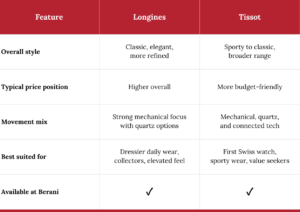
How to Choose Between Longines and Tissot
Once you understand the personality of each brand, the next step is narrowing your choice more practically. Instead of focusing only on online opinions or brand reputation, it helps to compare the decision through a few real-world factors.
Start with the basics:
Budget: Tissot is generally the better choice if you want to stay within a more accessible price range while still getting a respected Swiss-made watch. Longines typically requires a higher investment, but many buyers feel that the added refinement justifies the price.
Style Preference: If you mostly wear tailored, business, or dressier outfits, Longines may feel like the more natural match. If you want a watch that can move easily between casual wear, office wear, and weekends, Tissot often offers more variety.
Movement Preference: Buyers interested in traditional mechanical watch appeal may lean toward Longines, while those who want more options across quartz, automatic, and feature-driven models may prefer Tissot.
Daily Use: Think about how you will actually wear the watch. For sportier everyday use, Tissot may be the easier fit. For a more classic watch that feels suitable for formal settings and polished daily wear, Longines may make more sense.
These points can help narrow the decision, but they should not replace the in-person experience. A watch can look perfect on paper and still feel wrong on the wrist. Case size, dial presence, finishing, and overall comfort are all things that become clearer once you see the watch up close.
That is why it is worth visiting a trusted retailer such as Berani to compare Longines and Tissot side by side. Seeing both brands in person can quickly tell you whether you are more drawn to Tissot’s versatility or Longines’ refinement, and that final impression is often what makes the decision much easier.