
Are Cartier Watches Water-Resistant? A Practical Guide for Owners
Many Cartier watches are water-resistant, but the rating varies by model and reference, and water resistance can decline over time. That last point matters most for owners: a watch that left the boutique with a rating on paper may not perform to that rating years later.
It is also important never to treat “water-resistant” as “waterproof.” Several current Cartier references, including the Panthère, Tank Must, Santos-Dumont, and selected Santos models, are rated to 3 bar, or approximately 30 metres. That does not mean every Cartier shares the same rating, and it does not mean any of them is built for a day at the pool.
This guide covers the practical questions owners ask most: rain, handwashing, showering, swimming, leather straps, aging seals, battery changes, servicing, and pre-owned watches.
Are Cartier Watches Water-Resistant?
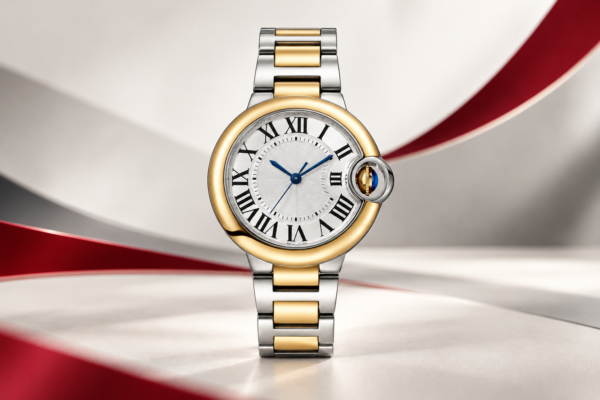
The honest answer depends on the exact Cartier reference. Many current Cartier dress and jewellery watches are rated to 3 bars, approximately 30 metres, but other references may differ.
Cartier’s current listings show selected Panthère, Tank Must, Santos-Dumont, and Santos watches at 3 bar / approximately 30 metres, but always confirm the rating for your exact watch.
A numerical depth rating is a laboratory pressure rating. It is not a guarantee that the watch should be taken to that depth in real-world use.
What Does 3 Bar or 30 Metres Actually Mean?
A 3 bar rating indicates resistance to a specified static pressure under test conditions. Real life is less tidy. Movement through water, splashing, temperature changes, and aging seals all create conditions that a laboratory test does not reproduce.
Think of 3 bar as light water resistance rather than a swimming or diving specification, unless Cartier’s instructions for the exact model say otherwise. In other words, “30 metres” is not permission to submerge the watch 30 metres underwater or anywhere close to it.
Can You Wear a Cartier Watch in the Rain?
Light rain or incidental splashes may be within the intended protection of a properly sealed water-resistant reference. However, an older, damaged, or recently opened watch may no longer perform to its original rating.
After exposure, dry the watch with a soft cloth rather than leaving moisture around the crown, caseback, or bracelet. If the watch has a leather strap, keep in mind that even though the case is waterproof, repeated dampness can harm the strap.
Can You Wash Your Hands While Wearing a Cartier?
Incidental splashes are different from deliberately holding the watch under running water. Before exposing the watch to water, check its exact rating and its current condition.
Soap, hot water, and repeated moisture can also affect straps, seals, and surface finishes over time. If the watch is on leather, keeping the strap dry is the safer approach, which in practice often means taking the watch off before washing your hands.
Can You Shower With a Cartier Watch?
We recommend against treating showering as routine safe use unless Cartier specifically permits it for the exact reference. Hot water, steam, soap, and repeated temperature changes create very different conditions from a static water-resistance test.
Leather straps should never be exposed to shower water. Even when the case has a rating, repeated shower exposure is an unnecessary risk for most Cartier dress and jewellery watches.
Can You Swim With a Cartier Watch?
There is no blanket yes or no for the entire brand. Many current Cartier dress-oriented references are rated to 3 bar / 30 metres, and that rating should not be assumed to make them suitable for swimming.
If swimming matters to you, check the exact reference, Cartier’s current instructions, and the watch’s present water-resistance condition. For an older or pre-owned watch, have it professionally pressure tested before relying on it in water.
Water Resistance by Popular Cartier Collection
Panthère de Cartier
Current Panthère models are listed at 3 bar / around 30 metres, but the rating should be confirmed for the exact watch. The Panthère is a jewellery-oriented watch, and its flexible bracelet does not change the need to follow the case’s actual water-resistance rating.
For gold or diamond-set versions, keep care focused on the exact reference and its current condition. If you are curious how this looks in practice, you can view a small reference such as thisPanthère de Cartier watch from Berani.
Cartier Tank
The current Tank Must is listed at 3 bar / approximately 30 metres. Tank references vary widely by sub-collection, age, case material, and strap configuration, so a rating on one Tank says little about another. If you want to understand how those references differ, our guide onWhat Is the Cartier Tank Watch explains the differences in size, strap, movement, and specifications.
Leather-strap Tank owners should think about strap protection separately from case water resistance.
Santos de Cartier and Santos-Dumont
Current Santos and Santos-Dumont models are listed at 3 bar / approximately 30 metres. However, there are numerous references in the larger Santos family, so don’t assume that a single ranking applies to every Santos. For more on the design and ownership considerations, see our overview ofSantos de Cartier.
Interchangeable straps do not change the case rating, but a leather strap may still be unsuitable for repeated water exposure.
Ballon Bleu de Cartier
Ballon Bleu water resistance also varies by reference. Berani has previously documented a 40 mm Ballon Bleu reference rated to 3 bar / around 30 metres, but the safest approach is to check Cartier’s current specifications for the exact reference rather than relying on a collection-level assumption.
Why Water Resistance Changes Over Time
Gaskets and seals age. Over the years, they can harden, shrink, or lose their ability to seal properly. Impacts can also affect the crown, crystal, or case sealing surfaces, and previous repairs, over-polishing, or damage can compromise the case’s ability to seal correctly.
This is why an older watch should not be trusted solely on its original published rating. The number tells you what the watch was designed to do, not what it can do today. Our broader guide toCartier watch maintenance covers cleaning, servicing, battery care, storage, and water-resistance upkeep in more detail.
What Happens After a Battery Change or Service?
Quartz Cartier watches eventually require a battery replacement. Because the case must be opened, the watch should be properly resealed and, where appropriate, water-resistance tested afterward. The same principle applies after a mechanical service or any other work that requires opening the case.
When you book a service, ask whether pressure or water-resistance testing is included. It is a simple question, and the answer tells you whether you can rely on the watch’s sealing afterward.
Leather Straps and Water Exposure
Leather can stain, stiffen, stretch, darken, or deteriorate with water exposure. A watch case may have water resistance while the leather strap remains unsuitable for repeated moisture.
Remove or protect leather-strapped Cartier watches around swimming, showering, and prolonged humidity. If the strap does get wet, allow it to dry naturally away from direct heat.
Pre-Owned and Vintage Cartier Watches Need Extra Caution
Original factory ratings should never be assumed to remain intact decades later. Service history, gasket condition, previous case opening, crystal replacement, crown condition, and general case wear can all affect sealing.
If you are buying pre-owned, our guide topre-owned luxury watches in Canada explains why water resistance on older watches should be verified rather than assumed. Have a pre-owned or vintage Cartier professionally tested before exposing it to water.
For valuable vintage pieces, preservation may matter more than trying to restore modern water resistance.
What to Do If Water Gets Inside a Cartier Watch
Visible condensation, fogging, or droplets under the crystal are a reason for prompt professional attention. If you notice any of these:
- Stop exposing the watch to water.
- Do not use a hair dryer, oven, radiator, or rice as a DIY drying method.
- Arrange a professional assessment as soon as possible, because moisture can damage the dial, hands, movement, and internal components.
How to Protect Water Resistance Over Time
A few habits go a long way:
- Know the exact reference and its published water-resistance rating.
- Keep the crown fully closed according to the design.
- Do not operate the crown or pushers underwater unless Cartier explicitly permits it for the exact model.
- Avoid unnecessary hot water, steam, and strong temperature changes.
- Have the watch checked after hard impacts or case-opening service.
- For regular water exposure, consider periodic professional water-resistance testing.
- Do not rely on the watch’s age, appearance, or original rating alone.
If you are comparing models and want to check reference-specific details, you can browse currentCartier watches at Berani.
Frequently Asked Questions
1. Are Cartier watches water-resistant?
No. Cartier watches are water-resistant, not waterproof. Water resistance is limited, reference-specific, and can decline over time.
2. Is 30 metres of water resistance enough for swimming?
Do not interpret 30 metres literally. Many Cartier watches rated to 3 bar / 30 metres are dress or jewellery watches and should not automatically be treated as swimming watches.
3. Can a Cartier lose its water resistance?
Yes. Aging seals, impacts, crown damage, case opening, and previous servicing can all affect water resistance.
4. Should a Cartier be pressure tested after a battery change?
If the case has been opened and you intend to rely on the watch’s water resistance, resealing and appropriate testing are sensible parts of professional service.
5. Can a leather-strap Cartier get wet?
The case may have a water-resistance rating, but leather itself can be damaged by water. Repeated exposure should be avoided.